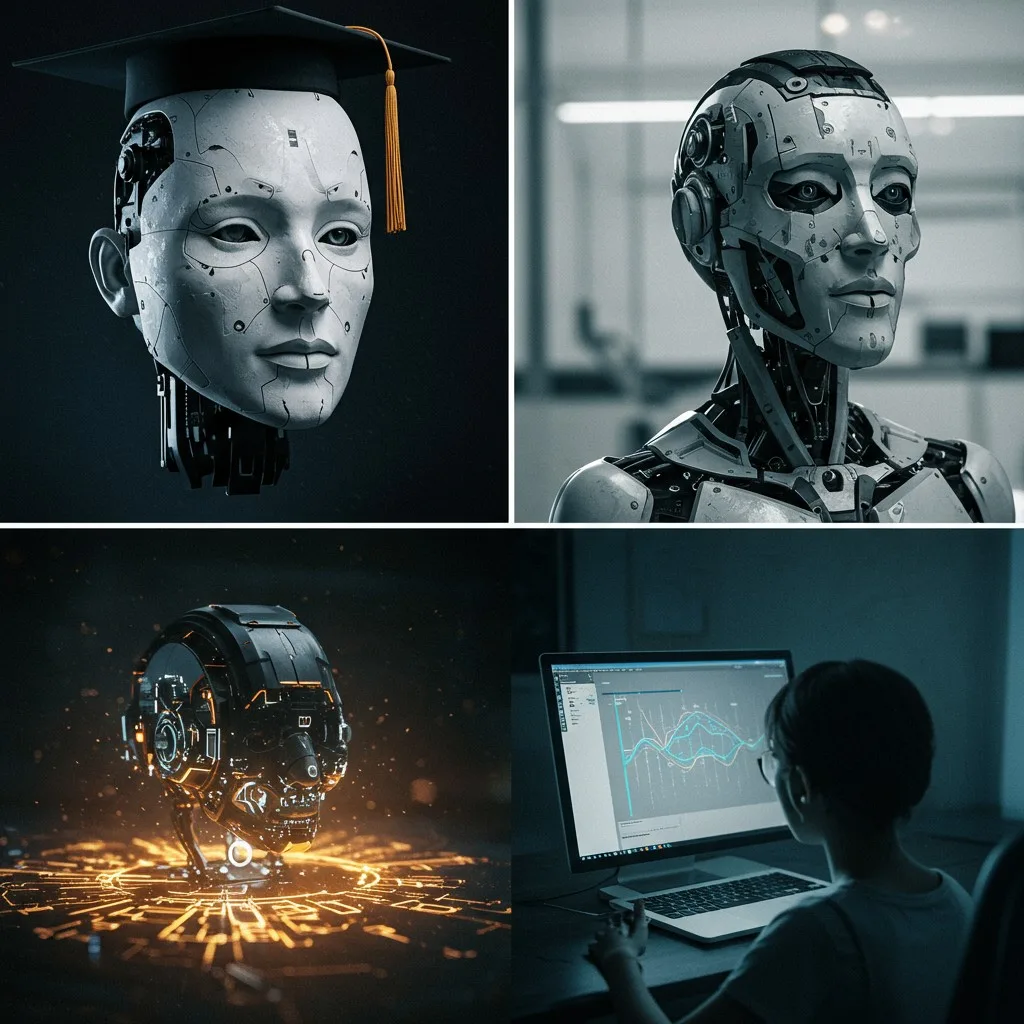
Impact of AI on people's education
Artificial intelligence (AI) is a present reality in our daily lives that compels us to adapt to take advantage of its benefits. It is essential to learn with and about AI: a field experiencing exponential growth in which students must use it not only to learn, but also to understand concepts and draw well-founded conclusions. Practice is key, and teachers must guide this path, placing students at the center of their learning. Combining AI with active learning methodologies represents a disruptive shift. To move forward, it is necessary to understand how this new landscape, a true revolution in the knowledge society, operates. Teaching the correct use of AI is, therefore, the key challenge for universities. Faculty must provide clear instructions, from how to interact with these tools to the proper citation of sources.
This new reality means learning to live in a different world, enhancing digital skills without losing sight of the humanities. The line between reality and virtuality is blurring, and fake realities are emerging that must be identified. Society is experiencing a hybrid interaction between humans and machines: humans contribute curiosity, critical thinking, empathy, and problem-solving skills; AI, on the other hand, improves efficiency, facilitates multilingual work, and offers personal learning tutors.
But it also carries risks: lack of transparency, data protection, copyright, hallucinations, or the impact of their human appearance. All of this necessitates an evaluation of individual and collective ethics in the use of data.
The challenges of AI
In the teaching environment, it is necessary to prepare to apply active methodologies combined with traditional training. Faced with the challenges of AI, critical thinking is essential to avoid losing interest in analysis, to deepen reflection, and to review the literature. It is necessary to strengthen both digital and humanistic skills, maintaining practices such as classroom presentations and the assessment of authorship.
With the risk of falling into hallucinations, it is essential to verify the validity of the answers. Teachers, for their part, must also update their skills to guide learning and detect plagiarism. This scenario can be extrapolated to the business world, where AI is transforming work environments.
Professionals must master digital skills to leverage tools that reduce costs and improve efficiency. AI helps create summaries, draft emails, and produce studies, but it's always necessary to verify its responses. Despite the risks, the benefits outweigh the costs.
Current challenges stem from a society that must coexist with technological evolution outpacing the pace of human development and legal advancements. Each individual should understand the limitations and benefits of technology, as well as the problems arising from the asymmetry between tools and their uses. In education, students must recognize their value in research, while tutors guide the processes, identify students' actual contributions, and validate the results.
Formulating prompts is crucial: asking the right question can be more decisive than the answer. In this respect, traditional methodology remains useful, providing critical analysis and constant reflection.
Conclusions
AI offers valuable tools for researchers and transforms teachers into technological facilitators. Like any tool, its effectiveness depends on how it is used. Teachers' example and ethics are essential for guiding students. Society must learn to communicate with AI and use it rationally, complemented by professional experience and a critical perspective.
This technology places a greater burden on data validation, reinforcing the need for a foundation of knowledge and classical reasoning skills. The integration of AI into education is essential to maximize its benefits for humanity, because AI is not the future: is the present.
Authors: Eduard Cristòbal, Cristina Cinelli, Javier Asenjo (Members of the Commission of Teaching and Research Economists of the College of Economists of Catalonia)
Published in Catalan in the Digital Technical Magazine, No. 34 (October 2025)